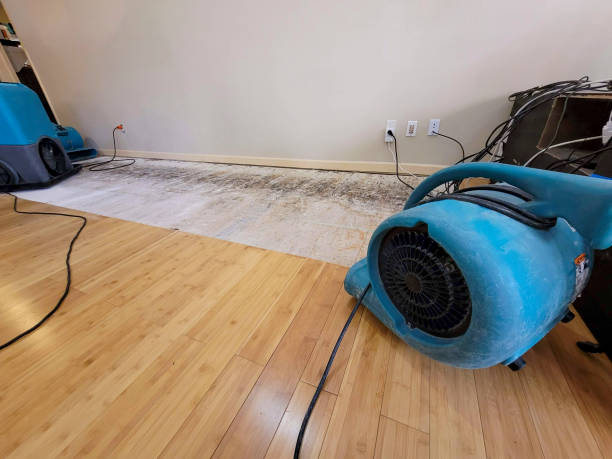
Basements hold onto moisture longer than any other part of a home, which makes Basement Flood Cleanup in Long Island, ME a genuinely specialized job, not a smaller version of a regular water call.
We know finished basement materials like drop ceilings, laminate flooring, and framed walls require different removal decisions than a main-level room.

We know how water pools differently below grade, often collecting near foundation walls rather than spreading evenly.
Diagnosing the actual entry point in Long Island, ME basements prevents the same flood from happening again next storm.
We handle finished-basement materials differently than a standard slab-and-drywall room.
We treat basement framing and subfloor with extra care since moisture lingers longer below grade.
A Long Island basement flood isn't handled the same way as an upstairs leak, and here's why.

Sump failure diagnostics are step one on most Long Island, ME basement calls.
Hairline foundation cracks are a common silent entry point we check during every basement assessment.
Drop ceiling tiles, baseboards, and laminate flooring are removed based on moisture readings specific to each material.
{We check window wells and French drain function as part of the source diagnosis|Clogged or failed window well drainage is a common Long Island, ME basement flood cause we test for|French drain performance gets evaluated alongside the sump system during our assessment}.
Extended drying cycles are standard for basements, not an upsell.
We treat basement materials proactively since moisture lingers longer in these spaces.
We'll ask a few basement-specific questions to prepare the crew.
Our nearest Long Island, ME crew arrives with basement-appropriate equipment loaded.
We diagnose the water source — sump, foundation, or window well — before quoting the cleanup scope.
Extended drying continues until the basement hits the same dry-standard threshold as any other space.

"Our sump pump failed during a storm and they not only cleaned up the water but explained exactly why the pump failed." — Carla D.
"They saved most of our finished basement drywall by only cutting where the moisture readings showed a problem." — Reggie F.
"Found a foundation crack we didn't even know we had. Glad they checked instead of just drying and leaving." — Nadia S.
We diagnose which of these applies before starting cleanup.
We'll identify sump issues and can refer or coordinate repair alongside the cleanup.
No, we assess materials individually and only remove what moisture readings confirm is saturated.
Below-grade spaces naturally hold more ambient humidity, requiring extended dehumidification runtime.
We trace water staining patterns back to the wall during assessment to confirm a foundation source.
If your basement is in or near Long Island, a crew can typically respond the same day.

Call now and describe the basement situation to a real Long Island, ME dispatcher.
Call +1-844-578-1604